“Present your bodies a sacrifice—living, sanctified, acceptable to God…” (Romans 12:1, YLT)
What Were Offerings?
In the Torah, offerings were not random.
They were structured, symbolic, and sacred.
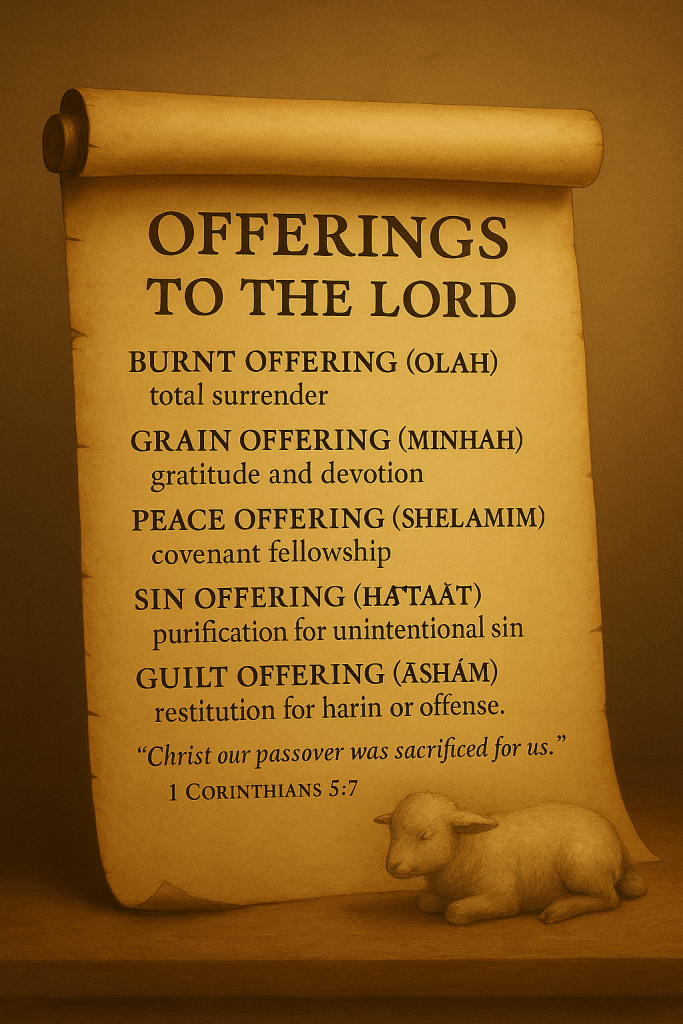
There were five core types:
- Burnt Offering (ʿolah) — total surrender
- Grain Offering (minḥah) — gratitude and devotion
- Peace Offering (shelamim) — covenant fellowship
- Sin Offering (ḥaṭṭāʾt) — purification for unintentional sin
- Guilt Offering (ʾāšām) — restitution for harm or offense
Each one represented a different part of relationship: with God, others, and self.
Fulfilled, Not Forgotten
Jesus fulfilled the offering system:
- He was the burnt offering, giving Himself entirely.
- He was the grain offering, without leaven (sin).
- He was the peace offering, restoring covenant access.
- He was the sin offering, covering unintentional guilt.
- He was the guilt offering, paying the debt none of us could.
“…Christ our passover was sacrificed for us.” (1 Corinthians 5:7)
But understanding these offerings still matters—
because they reveal His walk.
What It Means for Us
We no longer bring animals or grain.
But the offering of our life remains.
- Total surrender (burnt)
- Gratitude in action (grain)
- Peace with others (peace)
- Turning from sin (sin)
- Making wrongs right (guilt)
These patterns weren’t abolished.
They were fulfilled—and handed to us
as a living walk.
“Present your bodies a sacrifice—living, sanctified, acceptable to God…” (Romans 12:1, YLT)
Scripture to Revisit:
Leviticus 1–7
Numbers 15
Isaiah 53
Psalm 51
Hebrews 9–10
Romans 12:1
1 Corinthians 5:7
Ephesians 5:2
 Behind the Narrow Gate